




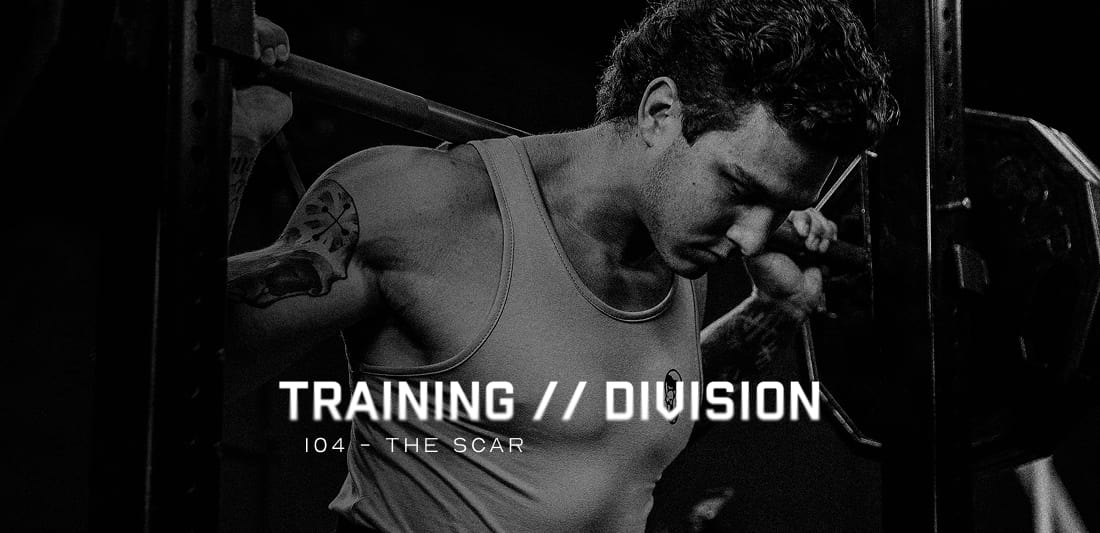
There comes a point in every pursuit when the work stops feeling heroic.
The music doesn't hit the same. The motivation runs thin. The weights feel heavier than they did last week, and the body starts keeping score.
Your hands are rough. Your muscles are beaten down. Your lungs have been tested. The mirror doesn't show the transformation you imagined, and the results aren't arriving as quickly as you demanded.
Good.
Not because suffering is the goal. Not because pain makes you special. But because this is where you find out whether you're committed to the work or just addicted to the feeling of starting.
Anybody can train when the energy is high.
Anybody can chase a goal when the progress is obvious.
But what happens when the work starts taking something from you?
When the early mornings stack up. When the bar digs into your back. When the last rep feels like a negotiation between your discipline and your excuses.
That's where the scar gets earned.
Not in the moment you talk about what you're going to do.
In the moment you do it.
Every scar is a receipt.
Every callus is evidence that you put in the hours. Every hard session is a reminder that you were willing to trade comfort for capability.
But understand this: You are not here to destroy yourself. You are here to forge yourself.
There is a difference.
The weak mindset worships pain because it needs proof of commitment. The disciplined athlete respects the process because they understand the mission is bigger than one workout.
You don't need to finish every session broken. You need to finish knowing you gave the work what it demanded—and that you protected your ability to do it again.
The goal isn't to walk away destroyed.
The goal is to return harder to break.

What It Looks Like in the Gym
You show up when the excitement is dead and the only thing left is the standard you set.
- You grip the bar with tired hands and finish the work with intention, not theatrics.
- You stop treating discomfort like an emergency. You learn to sit in the burn, control your breathing, and keep moving when the work gets ugly.
- You don't confuse a reckless session with a productive one. You push your limits without sacrificing your future for today's ego.
- You earn your calluses through consistency, not by chasing unnecessary damage.
- You respect the rest day because you understand that a weapon left in the fire forever eventually loses its edge.
Why It Matters Outside the Gym
Life doesn't care how clean your plans look on paper.
It will hit you with setbacks you didn't prepare for. It will take things you thought were secure. It will force you into seasons where you have to rebuild with less energy, less certainty, and fewer answers than you wanted.
And when that happens, you get a choice.
You can let the experience make you bitter, or you can let it make you sharper.
You can carry the scar as proof that life beat you, or you can carry it as evidence that you went through something hard and learned how to stand back up.
That doesn't mean every wound is necessary. It doesn't mean you should chase suffering or pretend that everything happens for a reason.
It means the damage doesn't get to write the final chapter.
You do.
The hard conversation can teach you courage. The failure can expose the weakness you refused to address. The season that stripped away your comfort can reveal what was actually holding you together.
But none of that happens if you keep picking at the wound.
At some point, you have to clean it. Protect it. Give it time to heal.
Recovery isn't weakness. It's how you make sure the damage doesn't become the thing that ends the mission.
The toughest person in the room isn't always the one who pushes the hardest.
Sometimes it's the one who knows exactly when to put the weight down, recover, and come back ready to fight another day.
The Price of Staying in the Fight
There is a version of toughness that wants you to ignore everything.
Ignore the pain. Ignore the fatigue. Ignore the warning signs. Prove that you're committed by taking more than you can handle.
That's not toughness.
That's ego wearing a uniform.
Real grit is more demanding than that.
It asks you to show up when you don't feel like it. To work when nobody is watching. To take an honest look at your weaknesses instead of hiding behind your pride.
It asks you to push through the discomfort that comes with growth—but to recognize when the body is asking for something other than another rep.
You don't need to be reckless to be relentless.
You need to be consistent enough to keep the promise.
Because one brutal day means nothing if it costs you the next thirty.
The strongest people aren't the ones who never get hurt.
They're the ones who understand the difference between earning a scar and creating a setback.
They know when to attack. They know when to adapt. They know when to recover.
And they don't need to apologize for any of it.
Final Thought
Let the work leave a mark.
Let the early mornings take their share. Let the hard sessions build something in you that comfort never could. Let the calluses remind you that you have put your hands on the work and stayed there.
But don't confuse being damaged with being dedicated.
You aren't here to collect pain.
You're here to build strength that lasts.
Earn the scar. Respect the recovery. Come back ready.
Because the real victory isn't proving how much damage you can take.
It's becoming the kind of person who can keep showing up, keep getting stronger, and keep moving forward long after the excitement is gone.

Leave a comment
All comments are moderated before being published.
This site is protected by hCaptcha and the hCaptcha Privacy Policy and Terms of Service apply.